
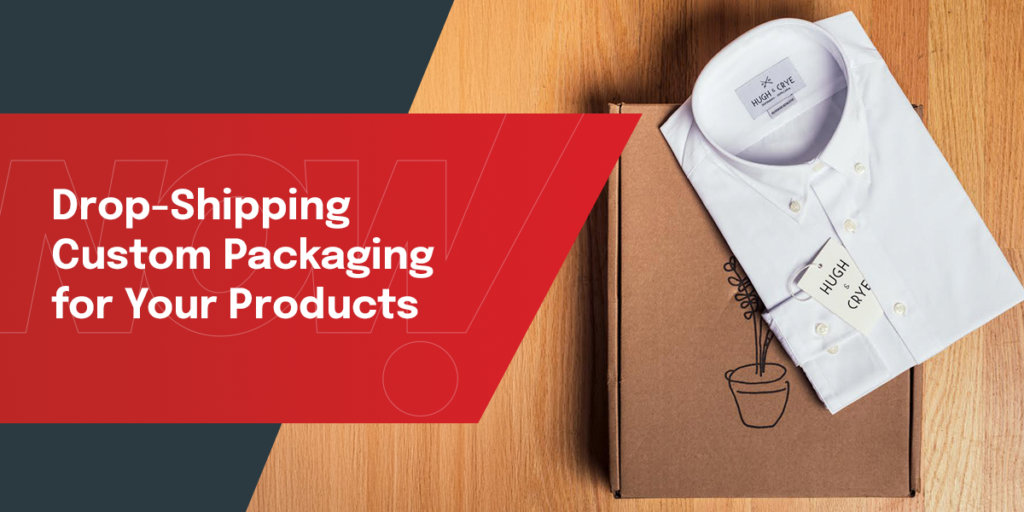
When your product arrives on your customer’s doorstep in the same generic cardboard box as your competitor’s, the only differentiator is price — a race to the bottom that erodes margins and destroys brand equity.
Though delivery represents your single physical touchpoint with customers, most drop-shippers use anonymous packaging, thus losing critical opportunities to prevent product damage and communicate brand value.
Learn about drop-shipping custom packaging for your products — the box styles, strength ratings and printing methods that maximize return on investment while minimizing capital outlay. Then, discover how to integrate custom corrugated packaging into third-party logistics workflows to turn commodity deliveries into branded experiences.
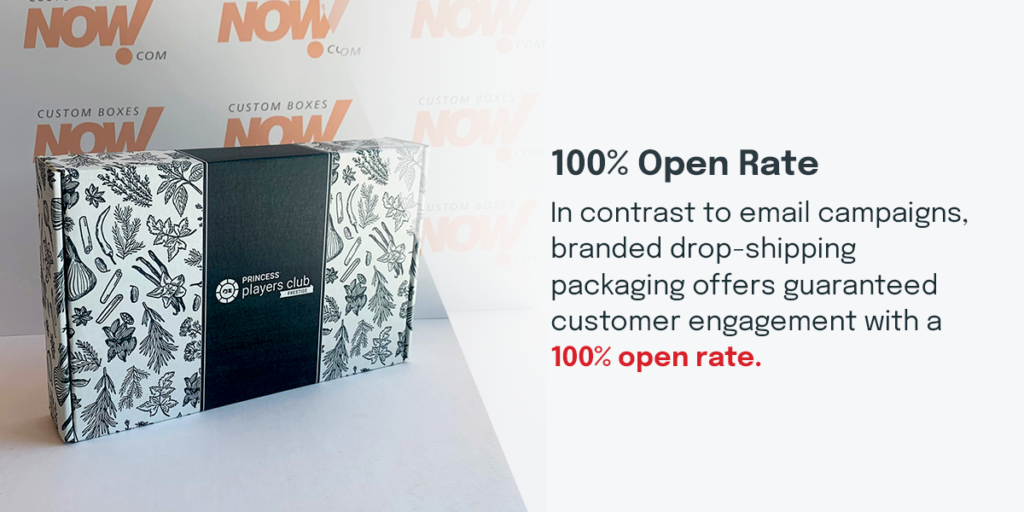
Traditional marketing tactics face declining performance and rising costs. In contrast to email campaigns, which struggle with average 42.35% open rates and 2.3% click-through rates, branded drop-shipping packaging offers guaranteed customer engagement with a 100% open rate. Since every customer physically interacts with your packages, this “owned” media channel is the most reliable tool in your marketing arsenal.
The unboxing economy has created unprecedented opportunities for organic reach. A well-designed package can become user-generated marketing material if customers document and share their experience across social media.
Professional packaging also serves as a critical trust signal. Around 40% of e-commerce customers report increased purchasing intent when retailers provide high-quality packaging experiences. An equivalent proportion of shoppers say professionally branded or gift-style packaging directly influences how they perceive the merchant’s brand credibility and quality standards.
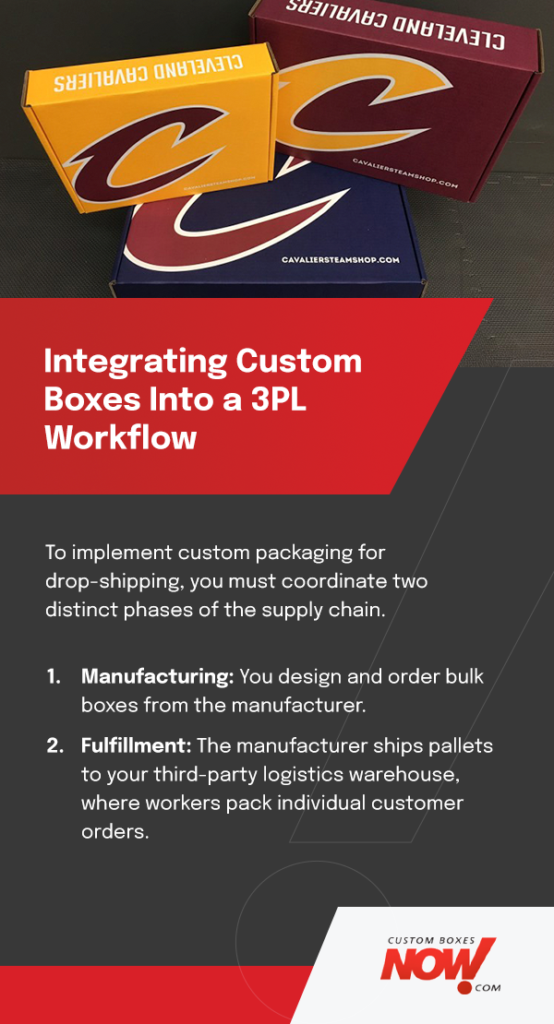
Successful drop-shipping operations rely on a precise operational “handshake” between box manufacturers and fulfillment centers. Misunderstanding this relationship can lead to inventory delays or fulfillment errors.
To implement custom packaging for drop-shipping, you must coordinate two distinct phases of the supply chain.
Understanding this distinction is crucial — the box manufacturer produces the asset, while the 3PL manages the labor. This separation allows drop-shippers to maintain inventory-light operations while strictly controlling their brand presentation.
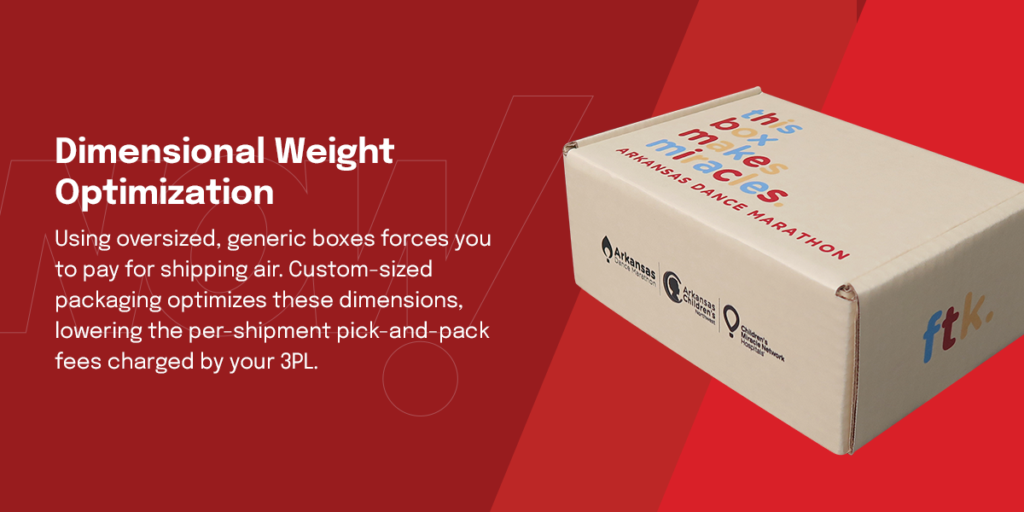
Beyond workflow, box design directly impacts your shipping margins. Most 3PLs and carriers charge based on package size instead of actual weight. Using oversized, generic boxes forces you to pay for shipping air. Custom-sized packaging optimizes these dimensions, lowering the per-shipment pick-and-pack fees charged by your 3PL.
Finally, you must balance bulk-ordering discounts with warehouse storage fees. While ordering thousands of boxes reduces your per-unit manufacturing cost, it increases the monthly pallet storage fees your 3PL charges. The optimal strategy involves calculating the total cost of ownership with this formula — (Unit Cost × Volume) + (Storage Fees × Time) + (Cost of Tied-Up Cash).
The cost of tied-up cash is the money frozen in excess inventory that you could have used for marketing or product development.
Branded drop-shipping packaging directly impacts shipping costs and your customers’ experience. Each corrugated design serves specific logistical and marketing purposes within drop-shipping operations.
The regular slotted container remains the most economical choice for standard drop-shipping operations. Its simple construction and material efficiency make it ideal for high-volume operations focused on cost optimization.
A full overlap container has a reinforced design that provides superior structural integrity for challenging or heavy shipments.
The one-panel folder is a wraparound solution that minimizes dimensional weight for flat items.
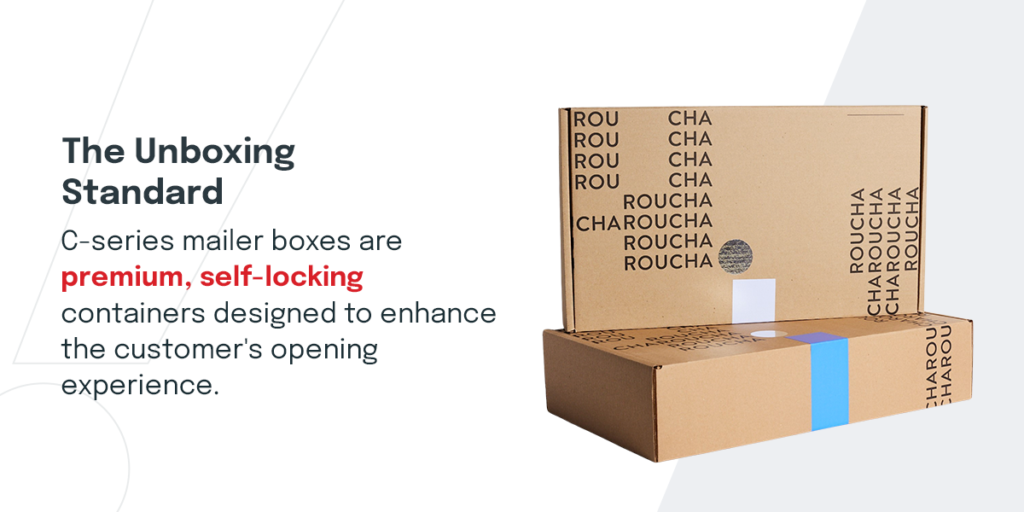
C-series mailer boxes are premium, self-locking containers designed to enhance the customer’s opening experience.
The half-slotted container is an open-top solution often used for internal organization or two-piece premium setups.
The durability of drop-shipping custom packaging directly impacts customer satisfaction and return rates. In drop-shipping, your product often travels through a longer supply chain than traditional retail items. A typical drop-shipped item may pass through between six and eight handoffs before reaching its destination, including the warehouse, local or regional hub and delivery truck. Each transition is a potential source of impact damage.
Edge crush test ratings represent the maximum vertical pressure you can apply to the corrugated board’s edge before it collapses. These numbers determine how well your packages will survive their journeys.
The internal wave structure of corrugated board affects protective properties and surface quality. Single and double walls serve distinct drop-shipping custom packaging applications.
Print technology selection affects unit costs and design capabilities. Matching box printing methods to order volumes and quality requirements optimizes packaging investments.
Digital printing works like a massive office printer, applying ink directly to the corrugated board. It is best for prototyping, seasonal campaigns and small-batch testing of 50 to 500 units. Since digital printing doesn’t require print plates, you can change your design for holidays or new product launches without penalty. It is the fastest method, perfect for drop-shippers who need to restock a 3PL quickly.
Digital printing has a higher per-unit cost on long runs than analog methods.
Flexo uses flexible relief plates, like a rubber stamp, to transfer ink to the board. It is best for high-volume orders of more than 1,000 units with simple branding — a logo, website and URL. It offers the lowest unit cost at scale, so the more you print, the more you can save. Flexographic printing requires an up-front investment in print plates. Since you cannot achieve photorealistic resolution, it is less flexible for design changes.
Litho involves printing high-resolution graphics onto paper and laminating the paper to the corrugated board. It is best for consumer electronics, cosmetic sets and luxury goods requiring magazine-quality imagery. The stunning visual resolution carries the highest manufacturing cost and has longer lead times.
For a business owner, the decision ultimately comes down to ROI. Is spending an extra 50 cents or $1 a box financially justifiable? Evidence suggests that the cost of ignoring branding is far higher for drop-shippers.
The average e-commerce return rate hovers around 16.9%, with damage accounting for a significant portion of these returns. Worse, 51% of consumers say they are unlikely to repurchase from a brand if a package arrives damaged, so cutting costs on cheaper boxes may cost you in the long run.
Generic boxes are often ill-fitting, leading to product movement and breakage. Custom packaging for drop-shipping, like a one-panel folder or regular slotted container, eliminates movement.
Customer acquisition costs are rising across every ad platform. Since it costs about six times as much to win a new customer as to retain an existing one, increasing lifetime value is critical to surviving the hypercompetitive e-commerce landscape. Research suggests that a 5% increase in customer retention can result in a 25% to 95% boost to revenue.
The unboxing moment is an emotional anchor. A premium, branded experience dramatically increases the likelihood of a second purchase. If a branded box improves your retention rate by even 1%, the ROI is immediately positive.
Most carriers calculate shipping costs based on whichever is higher — the dimensional weight or the actual weight. Dimensional weight is a calculation carriers use to charge you for the space your package occupies in their truck. You can calculate it by dividing the box volume by a set divisor, which is 139 for commercial freight shipped via FedEx and UPS.
When you use a generic stock box from a 3PL, you often pay to ship empty air.
For most drop-shippers, the fear of dead stock is a significant barrier to custom packaging. Traditional manufacturers often demand minimum order quantities of as many as 10,000 units, forcing you to sink thousands of dollars into inventory before you’ve ascertained that the product will sell in the long term.
Working with a domestic manufacturer with no minimum order quantity eliminates this financial risk.

Transitioning to custom packaging for your drop-shipped products represents a strategic shift from commodity selling to brand building. It protects your product, lowers your shipping fees and turns your delivery into a marketing event.
Custom Boxes Now specializes in corrugated packaging designed for drop-shipping logistics. Our Box Builder tool allows you to create packaging that meets your 3PL’s dimensional requirements while optimizing shipping costs.
Get started today or contact our packaging specialists to discuss your specific 3PL integration requirements.

