
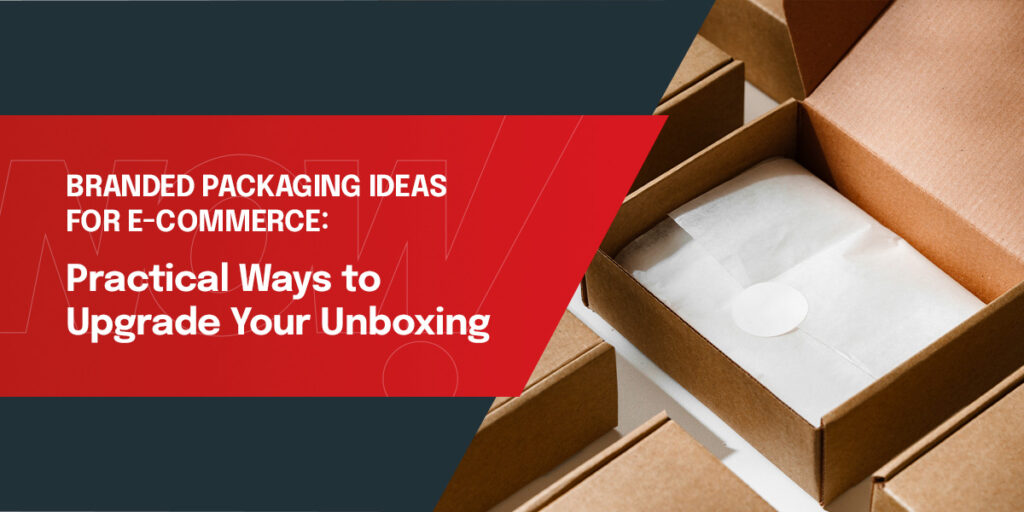
Every package you ship is a physical touchpoint with your customer. It’s tactile, shareable and surprisingly influential when it comes to repeat purchases and word of mouth. In a crowded market, packaging can set your brand apart from competitors shipping similar products in generic boxes.
Elevating that moment doesn’t require a luxury budget. Smart branded packaging ideas layer together — a custom-printed box here, a thank-you card there, a QR code that bridges to your digital world. Start with the box itself, then add the details that fit your company and your margins.
The best packaging systems usually combine three elements — an exterior brand cue, an interior presentation element and a post-purchase engagement piece. Choose the mix based on your product’s size, fragility, price point and audience expectations.
Interior printing is where the surprise happens. Adding graphics to the inside lid creates a reveal that customers connect with. A bold pattern, message or care instructions printed inside the package turns the unboxing into something worth sharing, helping spread your reach.
When it comes to e-commerce packaging, print method matters. There are three main options, each suited to different order volumes and price points:
If you’re ready to customize your packaging, have your artwork prepared. Box manufacturers handle structural design and prepress optimization, but the graphics themselves — your logo, colors and messaging — need to come from you. Custom mailer boxes are built to your specifications, so the better your artwork, the sharper the final product.
If custom-printed boxes aren’t feasible yet, branded tape and logo stickers are straightforward exterior upgrades you can implement quickly. They transform the moment of first contact, ensuring your branding is visible before the customer even picks up the package.
Two options work well:
Consistency across your box matters. When your tape, sticker, tissue and inserts share the same colors, fonts or graphic elements, the package reads as a designed system rather than separate pieces. That cohesion signals intentionality without requiring premium materials.
Think of a subscription box sealed with branded tape in the company’s signature color, finished with a logo sticker on the top flap — the branding appears three times before opening. This layered detail separates a forgettable unboxing from one that gets posted to Instagram.
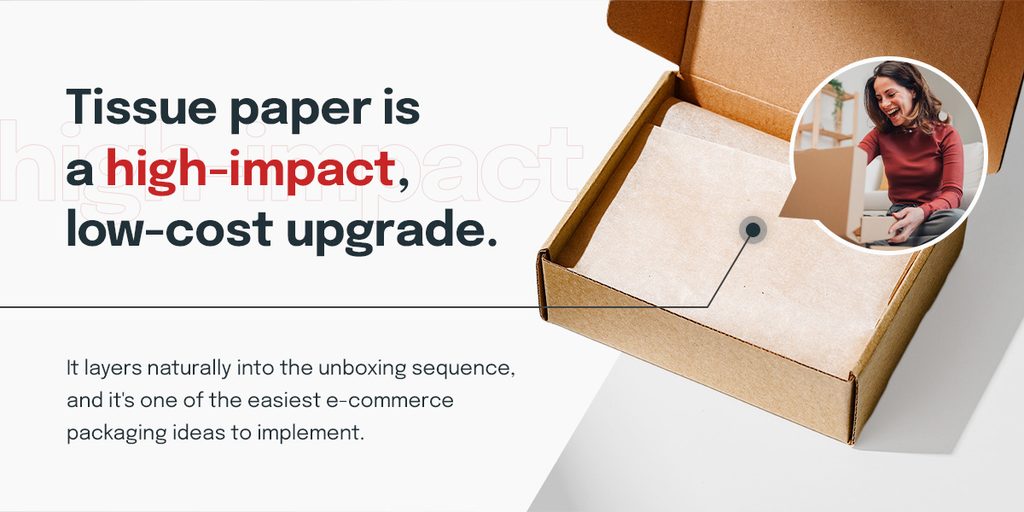
Tissue paper is the interior’s first impression, as it’s what the customer encounters when they lift the lid. It serves a dual function — protection and presentation. Some options include:
Tissue paper is a high-impact, low-cost upgrade. It layers naturally into the unboxing sequence, and it’s one of the easiest e-commerce packaging ideas to implement. Whether wrapping a single item or bundling multiple products, tissue paper adds a finish that plain corrugated and Bubble Wrap can’t match. It’s one of the most versatile and budget-friendly unboxing experience ideas.
Void fill is functional since it protects the product during transit, but it’s also an overlooked branding opportunity. The right void fill secures your product and reinforces your values.
Three options stand out:
Effective void fill prevents movement without overwhelming the unboxing moment. The goal is to secure the product during shipping while keeping the reveal clean — customers shouldn’t have to dig through excess filler to reach what they ordered.
Right-sized packaging reduces the need for excessive void fill. When a box is engineered to fit the product precisely, you use less material, eliminate wasted space and create a cleaner unboxing experience.
The thank-you card is the human moment of the unboxing — a personalized touchpoint that customers increasingly expect. When done well, it drives repeat purchases and encourages social sharing.
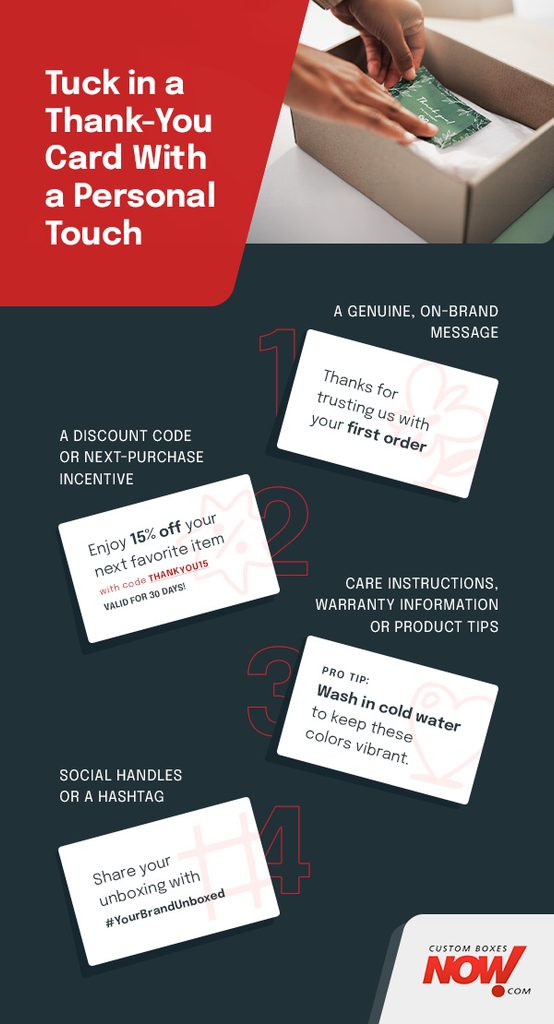
Here’s what makes a great thank-you card:
Handwritten-style notes are especially effective for subscription boxes and premium product brands. Printed cards with a script font and a signature graphic work just as well. The goal is to make the customer feel seen, not processed.
Research shows that 57% of consumers expect a more memorable and personalized unboxing experience, such as a handwritten note or high-quality branded packaging. Gen Z and Millennials are 11% more likely than other generations to expect that level of personalization. If your target customer skews younger, the thank-you card can be an easy way to engage your buyers. They’re one of the simplest custom packaging ideas to execute, and they fit neatly inside any mailer box without adding weight or bulk.
Promotional inserts and samples turn the unboxing moment into a revenue driver. They give the customer something to act on beyond just enjoying their purchase.
Two angles work here:
Research shows that 57% of consumers are more likely to repurchase from a brand when they receive gifts and free samples. That’s a meaningful lift for something that costs little per unit.
For subscription box sellers, promotional inserts and samples are especially valuable. Custom subscription boxes are built around discovery and delight, and a well-chosen insert or sample product amplifies both.
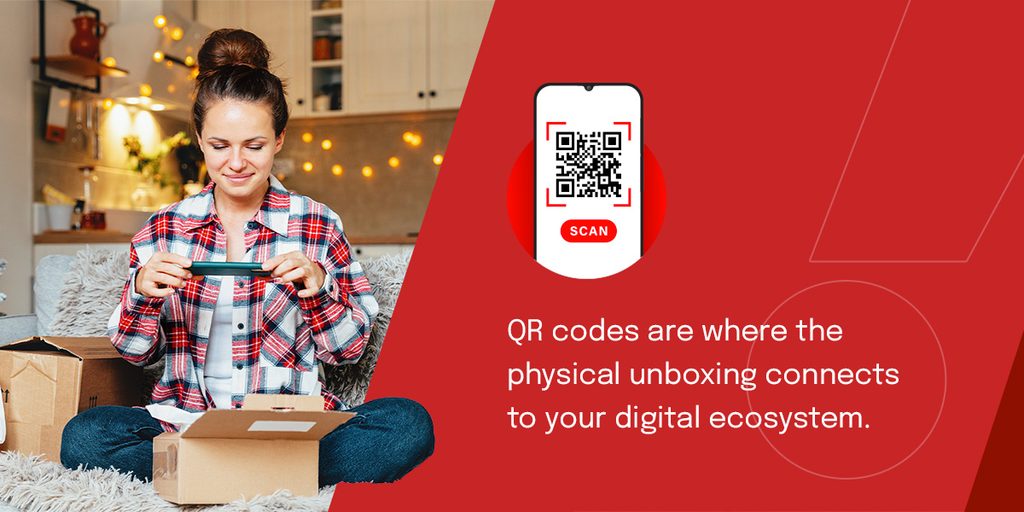
QR codes are where the physical unboxing connects to your digital ecosystem. Customers are already filming and sharing their unboxings, so the opportunity is massive — the hashtag #unboxing has surpassed 150 billion views on TikTok alone. A QR code lets you capture that reach and extend it beyond social media.
QR codes can be printed directly on the box interior, on a thank-you card or on a dedicated insert. Ideas include:
Branded QR codes with your logo or colors integrated look more intentional, encouraging user interaction. Research shows that 79% of consumers are more likely to purchase products with a scannable QR code that provides additional product information. A further 77% of consumers say product information is important when making a purchase decision.
Sustainable packaging isn’t just a feel-good choice — for a growing share of e-commerce customers, it’s a deciding factor in repeat purchase. In fact, 31% of consumers say easily recyclable and premium packaging motivates them to shop with a company again. Making sustainability part of your packaging strategy means choosing materials that align with your values and communicating those choices clearly.
Look for boxes that display both the percentage of recycled content and certification marks directly on the packaging. This transparency signals credibility to customers who research sustainability claims before they buy. When requesting quotes from suppliers, ask for the exact recycled-content percentage and certification documentation — reputable manufacturers provide this information without hesitation.
A simple line like “This box is 100% recyclable — here’s how to recycle it” educates the customer and reinforces your commitment. Place recycling instructions on an interior panel or bottom flap where they’re visible during disposal, not just during unboxing.
Icons work well alongside text. For example, a recycling symbol with “Curbside recyclable” is instantly clear. If your packaging uses water-based inks or soy inks, state that too. Customers notice these details, and they’re more likely to share unboxing content when they can credibly tag it as eco-conscious.
Paper-based void fill, such as crinkle paper, shredded kraft or molded pulp inserts, can serve as a replacement for plastic Bubble Wrap and foam. Depending on the material and local recycling guidelines, many paper-based void fill options are recyclable, biodegradable or both, appealing to sustainability-conscious consumers.
Paper void fill also photographs better in unboxing videos and social posts, looking intentional and premium, while Bubble Wrap reads as generic.
Right-sizing can support sustainability and help reduce shipping costs. A box engineered to fit the product precisely uses less material, weighs less and takes up less space in transit. Structural design expertise matters here, ensuring every inch of your box has value.
For brands ready to explore sustainable packaging options, start with the box. Using eco-friendly packaging like kraft boxes made from post-consumer waste sets the foundation. From there, you can layer in paper-based void fill, recyclable tissue and messaging that tells the sustainability story in your own words.
Work with an ISO-certified supplier to help maintain consistent quality standards across shipments.
You don’t need to tackle all eight of these unboxing ideas at once. Start with the box itself and build from there.
Custom Boxes Now makes that first step accessible. We specialize in custom-printed boxes built to your exact specifications, with over 60 years of experience in structural design, prepress and manufacturing — all under one roof. Whether you need digital, flexographic or lithographic printing, we’ll match the right method to your order volume and price point. Our kraft boxes are made from 60%-95% post-consumer waste and are 100% recyclable, so your sustainability story starts with the package itself.
With an over 99% on-time delivery rate, ISO 9001:2015 certification and a 4.8/5-star rating on Trustpilot, we’ve built our reputation on speed, quality and reliability. Ready to upgrade your unboxing experience? Contact our team or explore custom mailer box options to get started.


